Rayscape: time for doctors, accuracy for patients. What the solution born in Timișoara has brought to the world
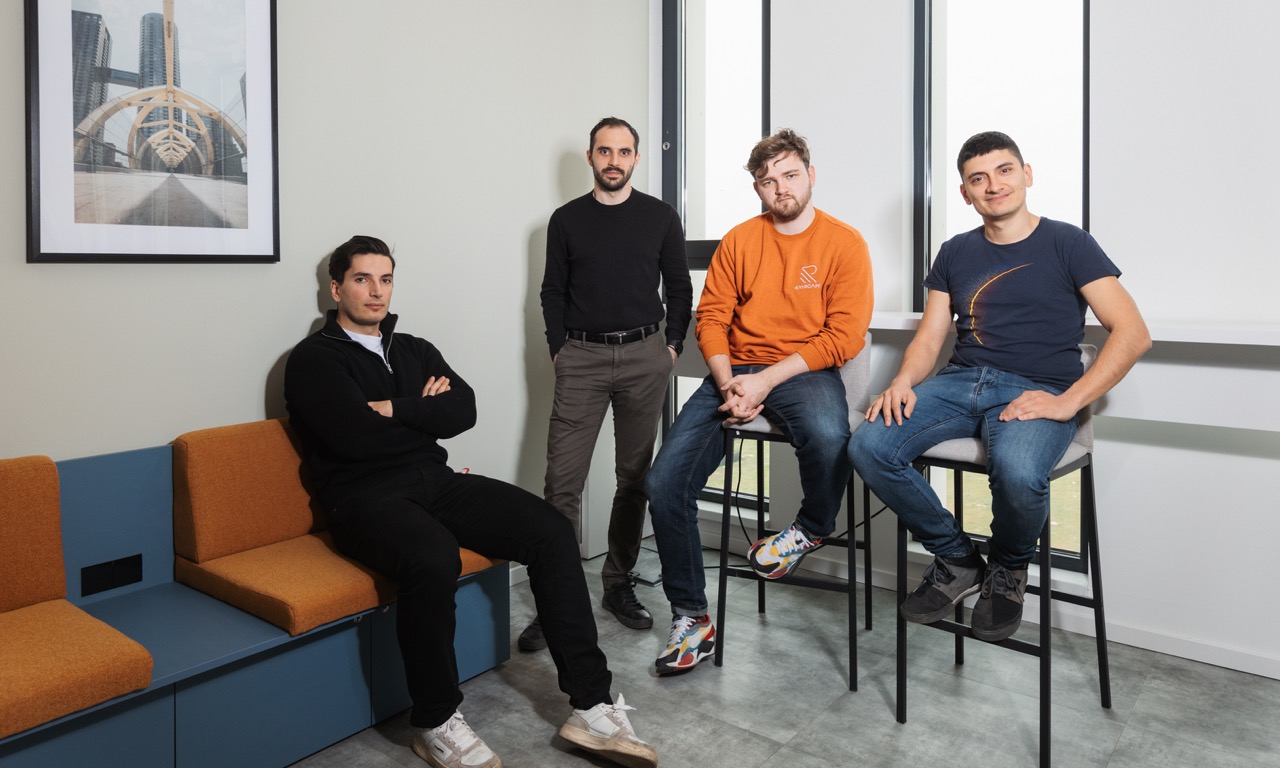
Rayscape is a health-tech company with impact, building artificial intelligence solutions for radiology. The solutions developed by the Romanian team plug directly into hospital systems and help radiologists detect and monitor lung diseases more easily, including lung cancer.
Rayscape has been on the market for six years, is present in 18 countries and is used in more than 300 hospitals and clinics.
The team recently announced it is working on a new product that extends its impact both on people's health and on the efficiency of doctors' work.
The new product in development, TAP-CT, is a software programme that uses artificial intelligence algorithms to analyse oncology computed tomography (CT) scans. It expands the company's analytical capabilities, following oncological lesions beyond the thorax into the abdomen and pelvis, and providing support across the entire CT investigation used to diagnose and monitor oncology patients.
But before the international contracts and the adoption rate across every major network in Romania, Rayscape was a company just starting out in Timișoara.
A solution hospitals needed
Rayscape works as an AI-based digital assistant, built specifically to help radiologists analyse X-rays and CT scans faster and more accurately.
It does not replace the doctor; it works as an advanced verification and support system.
The programme solves three major problems in hospitals and clinics.
- It detects subtle abnormalities: it analyses medical images in under a minute and can identify more than 148 types of conditions or suspicious details (such as very small pulmonary nodules or rib fractures). This lowers the risk that a tired doctor, reviewing hundreds of X-rays a day, misses a microscopic detail.
- It triages urgent cases: Rayscape instantly scans every study coming into the system and sorts it, moving a case forward according to the priority of the need.
- It automates measurements and reports: it automatically calculates precise dimensions or the evolution of lesions over time and generates a preliminary text with the conclusions of the analysis.
The usefulness of Rayscape's solution — and the need for it — has been validated over time. One of the key moments for the team, when they knew they were on the road to success, came when they started to have consistent users in hospitals, and when they managed to integrate their solution into a large chain of private clinics in Romania.
Ștefan Iarca, co-founder and CEO, says he never felt there was a single decisive moment in Rayscape's development, but rather a series of positive events that consistently confirmed they were on the right track — including the growth of revenue from abroad, which is now almost equal to domestic revenue.
"Throughout our evolution there have been positive moments all along, and depending on their impact we got confirmations that we were on the right trajectory. Whether we're talking about sales abroad and scaling into more hospitals outside the country, or about the fact that revenues right now are extremely close between home and abroad, with foreign markets growing more and more," Ștefan tells us.
The funding that secures continuity and growth in Europe
On the funding side, Rayscape has raised roughly €2 million to date, with the last investment, in 2024, bringing the company €500,000.
The company is currently in the process of raising a new round totalling €4.5 million. This includes an initial component of €1.5 million, of which one million has already been raised, while €500,000 represents fresh capital brought in partly through the Growceanu platform, where the campaign target is €300,000. A second tranche of €3 million is then set to close, for which an investment agreement has already been signed.
The decision to raise part of the funds on Growceanu came from a wish to open the opportunity to angel investors as well, who can contribute expertise and contacts, not only money. The Rayscape team believes this angel round opportunity will not come around again, making it a good moment for both the company and investors to get involved.
"We wanted to open an allocation for angels too, because there are certainly people interested in contributing their knowledge on specific aspects, in stepping in with their network and their contacts. It's not just an allocation for the financial side, but for know-how and community as well. And also because this is the last chance for an angel-type round," Ștefan explains.
Listing on the Growceanu platform was a new experience for the team, requiring a consistent effort of adaptation and documentation, but they valued the support they received from the platform's team.
Being on Growceanu allowed them to reach more investors and to increase the campaign's visibility.
Six years of Rayscape have also meant continuous development. Over the past year, the company reached 210 clinical integrations and passed €1.56 million in contracted recurring revenue, with 36% of it coming from foreign markets.
The main purpose of the new funding is to accelerate the company's presence in Europe, build a dedicated sales team and grow direct sales, moving beyond the partnership model it has operated in so far. The stake is building a sales team that will drive accelerated growth.
"With this round we want to raise, the thesis isn't to scale massively in the US, because we don't have the resources for that. It's more about getting a foot in the door there, having a few paying centres, so that in the next round we can go more aggressively for that market. In the States we want a bridgehead; the target now is Europe," the co-founder clarifies.
Impact on health
Rayscape plays an active role in health programmes. It has worked with the Marius Nasta Institute on tuberculosis screening in Romania, has run lung cancer screening in Hungary and a tuberculosis screening programme in Tanzania, in partnership with a clinic in Germany.
Ștefan explains their role in the medical field: "We're joining lung cancer programmes, one in Poland and a partnership in Germany. But beyond these collaborations, the entire Rayscape business has a social component. Alongside the screening programmes for tuberculosis and cancer, the simple fact that doctors can analyse more images unlocks healthcare potential and raises the detection rate of pathologies. The company's impact comes through everything it does."
The core of every intervention starts from the algorithm, and the Rayscape team makes its technology available to projects with different missions, which vary from country to country.
According to the statistics Rayscape has gathered, its product delivers a 30% reduction in radiologists' time and a 20% increase in the accuracy of image interpretation.
"In the CEE market we managed to open up this area of radiology in imaging — we certainly did it in Romania, and the proof is that all the major private clinic chains in the country use our solution," is the co-founder's view. As for the most realistic exit route, he believes manufacturers or the large chains, such as those in the US, would be the most suitable path for Rayscape.
The medical company born in Timișoara is on a clear upward trajectory. And now is the moment when it opens its doors to retail investors as well. So we asked Ștefan, the company's CEO, to imagine himself face to face with a potential investor. His message?
"We have rapid scaling planned across European markets, along with opening the US market and the new product we're building, one that will be the first of its kind. At the same time, these same points significantly increase the positive social impact we have."
Related Articles
.png)
The Future of Private Investment in Eastern Europe
CEE private investment grew at twice the European rate in 2024. Here's what the data reveals about the region's recovery — and what's driving it forward.
.png)
Why Many Angel Investments Fail
Angel investing has matured. Here's what the latest data shows about where the market is heading in Europe and Romania — and why early-stage bets fail.

Copyright GROWCEANU 2026.
All rights reserved.
CUI RO39963685
J2018003430353
4-5 Penes Curcanu, Timișoara, Timiș
support@growceanu.com
Powered by